
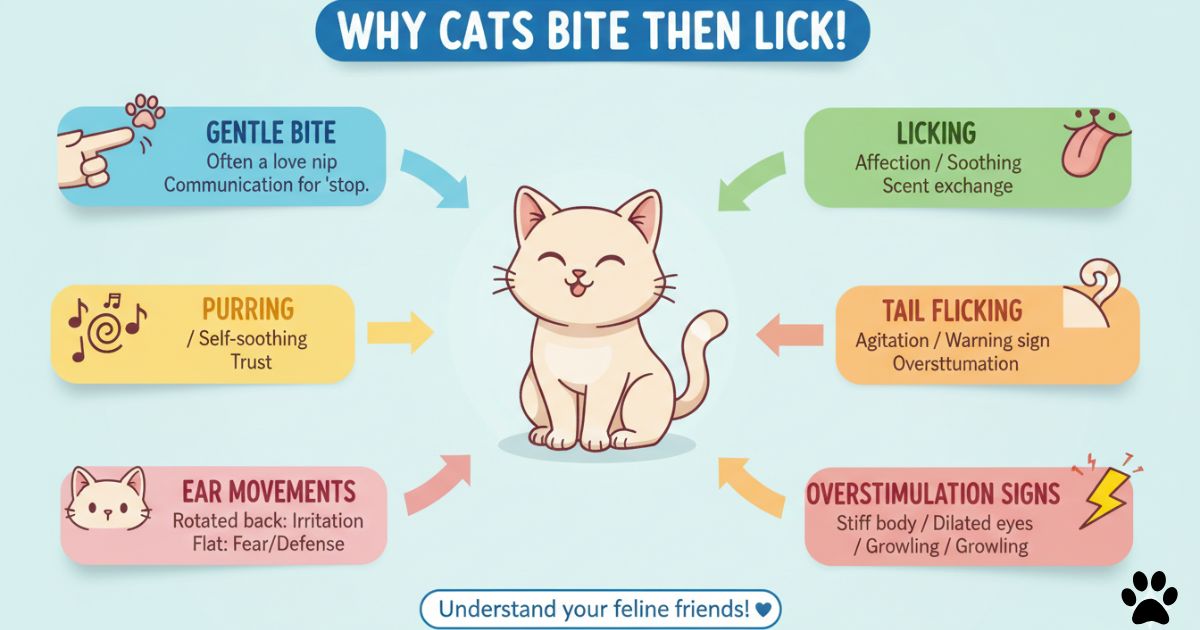
Have you ever wondered why do cats bite then lick right after acting sweet? Cats usually bite then lick as a way to communicate affection, excitement, or overstimulation. When a cat enjoys petting or grooming, it may suddenly give a gentle bite to signal that stimulation is becoming intense. Immediately after, the cat often licks to calm the situation and show trust. This behavior reflects natural grooming instincts learned during kittenhood, where mother cats use soft nips and licking to guide and comfort their young. In most cases, the bite is not aggression but a boundary, while the licking is a bonding response. Understanding this pattern helps prevent misinterpretation and reduces stress for both cats and owners. Recognizing these signals allows people to respond calmly, protect trust, and maintain a healthy relationship. 
From my personal grooming experience, I observe this behavior almost daily, especially with sensitive or anxious cats. Over time, I’ve learned to read these signs early and adjust my handling to keep cats calm, comfortable, and relaxed.
In this article, I will explain everything in a simple way. I will also share real experience, so you can understand your cat better and feel more confident.
Why Do Cats Bite Then Lick?
Cats bite and then lick because they feel love, excitement, and instinct at the same time. This behavior is usually a mix of affection and stimulation. It is not aggression in most cases. Your cat is not trying to hurt you. Your cat is trying to express feelings. Cats do not think like humans. They do not say “stop” or “slow down.” Instead, they use body language. A gentle bite followed by licking often means:
“I like this, but it is too much right now.”
This is very common. Many healthy and happy cats do this.
Why Does My Cat Lick Me Then Bite Me While Purring?
Purring means comfort. Biting means pause. I have handled many cats that purr loudly while licking. Everything feels calm. Then suddenly, they bite. This happens when pleasure turns into overstimulation. Purring does not always mean “keep going.” It means your cat feels safe and relaxed. But cats have limits. Their nerves can get overwhelmed fast.
Your cat feels good. Then the feeling becomes too strong. The bite is your cat’s way of saying, “That’s enough.”
This happens more often during long petting sessions.
Mixed Signals Explained Simply
- Purring = comfort
- Licking = bonding or grooming
- Biting = sensory overload
Cats enjoy affection in short moments. They do not like long, nonstop touching. Dogs often enjoy endless petting. Cats usually do not.
Reason of Cats Bite Then Lick
This behavior comes from emotion and instinct. There is no single reason. Several things work together.
Overstimulation During Petting
Cats have very sensitive skin. Their nerve endings react fast. What feels good at first can feel annoying seconds later.
According to mobile cat grooming specialists at Doctor Groomer, calm handling and short, one-on-one sessions help reduce overstimulation behaviors like biting after licking.
Too much touching can flip a switch in your cat’s brain. The bite happens before you even notice a change.
Love Bites vs Aggressive Bites
Love bites are soft. They do not break skin. They feel more like a pinch.
Aggressive bites are different. They are hard. They happen with fear, hissing, or escape.
Most biting and licking behavior involves love bites, not aggression.
Natural Hunting Instinct
Cats are natural hunters. That instinct never fully goes away. Even during calm moments, the instinct can appear for a second.
This does not mean your cat wants to attack you. It is just a reflex.
Grooming and Social Bonding
Licking is a grooming act. Mother cats lick kittens. Cats lick each other to bond.
Sometimes, biting is part of that bonding routine. It is normal cat behavior.
Why Do Cats Bite Then Lick When They Are Being Petted?
Your cat is setting boundaries. Most cat owners miss the early signs. Cats usually warn before they bite.
Common warning signs include:
- Tail flicking
- Ears turning sideways or back
- Skin rippling or twitching
I learned to stop petting as soon as I see these signs. When you respect those signals, biting happens less often. Your cat learns that you listen.
Why Do Cats Bite Then Lick Themselves?
It helps them self-regulate. Cats bite and lick themselves for many reasons. This includes:
- Adjusting their fur
- Releasing stress
- Responding to mild itch or irritation
This is normal grooming behavior. Most cats do this every day.
It becomes a problem only if:
- Hair loss appears
- Skin looks red
- The behavior becomes nonstop
In those cases, something else may be going on.
Is Biting and Licking Normal or a Problem?
It is usually normal. Sometimes, it is a warning.
When It’s Normal
- Bites are gentle
- No hissing or fear
- Happens during calm bonding time
In these cases, your cat is healthy and communicating.
When You Should Be Concerned
- Sudden change in behavior
- Painful or deep biting
- Signs of stress, pain, or illness
If this happens, observe closely. If needed, seek professional advice.
How I Handle Cats That Bite Then Lick
Slow and respectful handling works best.
From years of handling cats, I follow simple rules:
- I limit petting time
- I avoid sensitive areas
- I watch body language closely
I never force contact. I let the cat lead. One-on-one attention and calm energy reduce this behavior a lot. Cats respond better to respect than control.
How to Stop Your Cat From Biting After Licking
Prevention works better than correction.
Read the Signs Early
Do not wait for the bite. Stop when you see warning signs.
Adjust How You Pet
Stick to safer areas:
- Head
- Chin
- Cheeks
Avoid belly and lower back unless your cat clearly enjoys it.
Create Safe Boundaries
Let your cat start contact. Let your cat end it too.
This builds trust.
FAQs
Why do cats bite then lick suddenly?
Because stimulation crossed their comfort limit.
Is it affection or aggression?
Most of the time, it is affection mixed with instinct.
Should I stop my cat when it does this?
Pause calmly. Do not punish.
Can grooming reduce this behavior?
Yes. Handling and routine care help cats feel balanced.
Final Thoughts
When you understand why do cats bite then lick, you stop taking it personally. Your cat is not being rude. Your cat is communicating in the only way it knows. Once you learn to listen to these signals, everything changes. Your bond becomes calmer. Trust grows. Life with your cat feels easier. And that is when sharing your home with a cat becomes truly special.
Need professional cat grooming at your doorstep? Check out Monsieur Groomer for mobile grooming services that keep your pets happy and healthy.