
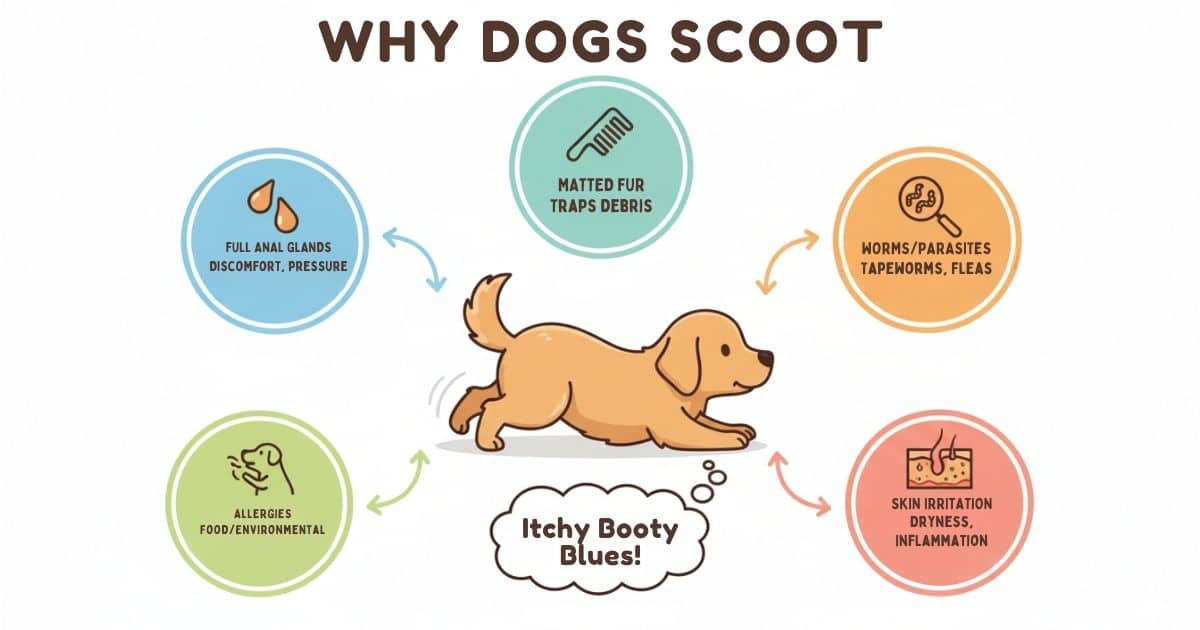
Have you ever asked yourself, Why do dogs scoot? I still remember the first time I saw my dog slide his bottom across the floor. I laughed at first, then worried something was wrong. Later, I learned the reason dogs scoot is not always funny. It can mean full anal glands, allergies, or worms. Some dogs scoot in the morning because of mild itching or belly trouble after sleeping.

I’ve helped many pet parents deal with this, and most cases are easy to solve. In this guide, I’ll share what causes it and how to cure dog scooting in simple, safe ways. Let’s help your dog feel clean, calm, and happy again.
What Does Scooting Actually Mean?
Dog scooting means your dog drags its bottom on the floor to stop itching or pain. It’s how they try to fix something that feels wrong near the rear. Most times, it’s from full anal glands, mild allergies, or simple irritation. I still remember when my dog first did it. He scooted across the rug like he was showing off a new trick. I laughed, then felt worried when he kept doing it. A quick vet visit showed his anal glands were full. After they were cleaned, he stopped right away. Think of it like us having an itch we can’t reach. Dogs don’t have hands, so they use the floor. It looks funny, but it’s their only way to get relief. It’s okay if your dog scoots once in a while, like after pooping or grooming. But if it keeps happening, there’s a deeper reason.
Common Reasons Why Dogs Scoot
Impacted or Full Anal Glands
Dogs often scoot because their anal glands are full or blocked. These tiny sacs near the tail help them mark scent, but when clogged, they cause pain and itching. I’ve seen many dogs drag their bottoms right before a vet visit a clear sign of pressure down there.
The main reason of dogs scoot is full or blocked anal glands that need gentle cleaning or vet help.
Allergies (Food or Environmental)
Allergies can make a dog’s rear itch just like skin does. Dust, pollen, or even a new treat can trigger it. I once gave my dog a fancy biscuit, and he started scooting that same night! A quick diet switch fixed it. The reason of dogs scoot can be food or skin allergies that make the rear area itchy.
Parasites or Worms
Worms like tapeworms or roundworms can make your dog’s bottom itch and burn. You might even see tiny white pieces near their stool. Regular deworming helps stop that. Dogs scoot when parasites cause rear irritation — treat with proper deworming and vet care.
Skin Infections or Irritations
Moisture, yeast, or bacteria around the rear can make dogs scoot for relief. I once groomed a pup with redness and a strong odor after cleaning and meds, he stopped scooting in two days.
Dogs scoot when skin infections cause itch or pain near the rear.
Poor Grooming or Matted Fur Around the Rear
Long or thick fur can trap dirt, poop, and moisture. That makes the skin itch and smell bad. A clean trim and regular wipe-down help a lot. As a groomer, I’ve seen dogs stop scooting right after a simple trim.
Dogs scoot when dirty or matted fur irritates the rear — keep it trimmed and clean.
How to Cure Dog Scooting Naturally and Safely
If your dog scoots, it may mean their bottom feels itchy or sore. You can help in simple and safe ways. Wipe your dog’s rear with a soft pet wipe to keep it clean. Add a little pumpkin to their food for better digestion. A warm bath with mild oatmeal shampoo can calm the skin. You can rub a small bit of coconut oil or aloe vera to ease the itch. Check for fleas, worms, or food allergies that may cause the scooting.

Make sure your dog drinks water and eats healthy food each day. Keep their fur short and clean around the tail. If scooting does not stop, visit your vet to be safe. These small, natural steps can bring fast comfort and help your dog feel happy again.
When to See a Veterinarian
Dogs scoot when something irritates their rear. It can be full anal glands, allergies, parasites, or skin problems. I remember the first time my dog scooted across the carpet. At first, I laughed. Then I worried something was wrong. A quick check revealed his anal glands were full. Once expressed, he felt better immediately. Scooting in the morning is common, too. It often happens after sleep when irritation builds overnight. Parasites can also cause this behavior. Worms make the area itchy, and deworming usually fixes it. Allergies to food or the environment can trigger scooting as well. Skin infections or matted fur can irritate the rear. Regular grooming, clean bedding, and a healthy diet prevent most issues. If scooting is frequent or painful, see a veterinarian to rule out serious problems.
More Article
- Dog licking genital area after grooming
- Furunculosis in Dogs from Grooming
- How to Groom a Dog With an Undercoat
Preventing Future Scooting Issues
Preventing scooting is easier than it seems. Start with a healthy diet. Foods with fiber keep your dog’s stool firm and anal glands working well. I like adding pumpkin or fiber treats if your dog tolerates them. Fiber and good food help stop scooting.
Exercise also matters. Daily walks keep digestion smooth and reduce rear irritation. I take my dog for short walks each morning, and it seems to help.
Clean bedding and grooming are key. Wiping the rear after potty breaks keeps the area dry and comfortable. Regular trims prevent mats and irritation.
My Personal Take as a Dog Groomer
I see dogs scoot almost every day. Puppies, adults, seniors—they all do it sometimes. Scooting tells me a dog has irritation near the rear.
One dog, Max, scooted every morning. At first, his owner laughed. Then we checked and found his anal glands were full. A quick cleaning fixed it right away.
I’ve learned that small signs matter. Regular grooming helps prevent scooting. A clean diet and proper hygiene also keep dogs comfortable.
I tell pet parents to act early. Don’t wait for problems to grow. A little care today stops big trouble tomorrow.
FAQs About Dog Scooting
Why do dogs scoot after grooming?
Dogs may scoot if their rear itches. Full glands or irritation can cause it. Cleaning and trims usually help.
Why does my dog scoot only in the morning?
Morning scooting can happen if glands fill overnight or the rear is itchy. A quick check can fix it.
Can I express my dog’s anal glands at home?
It is best to let a vet or groomer do it. Doing it wrong can hurt your dog.
How long does it take to stop scooting after treatment?
Most dogs stop within one or two days with cleaning, diet, or deworming. Persistent scooting needs a vet.
What home remedies help dog scooting?
Wipe the rear, trim fur, and add fiber to food. Watch for signs of infection or worms.
Final Thoughts
Dog scooting can seem funny, but it often signals a problem. Most of the time, it comes from full anal glands, allergies, worms, or dirty fur. Early action makes all the difference.
From my experience, checking the rear, keeping your dog clean, and feeding a fiber-rich diet solves most cases. Regular grooming and vet visits also help prevent issues before they start.
Remember, small signs matter. If your dog scoots often or seems uncomfortable, don’t wait—get professional help. Acting early keeps your dog happy, healthy, and itch-free.
For more pet care tips and real experiences, visit Monsieur Groomer. Your dog will thank you with wagging tails and happy days!